
The Question Every Homeowner Asks First
You've decided to remodel. Maybe it's the kitchen that hasn't been updated since the early 2000s, or a bathroom that no longer works for your family. Whatever the project, one question comes up almost immediately: how long is this actually going to take?
It's a fair question — and one that doesn't always get a straight answer. Timelines depend on the scope of work, the materials you choose, permitting requirements, and a dozen other variables. But after years of completing remodeling projects across Fort Lauderdale and surrounding communities, we've found that most homeowners simply want a realistic picture of what to expect so they can plan their lives around the work.
That's exactly what this guide is for. Below, we'll walk through the typical phases of a home remodel, give you ballpark timelines for common projects, and share tips to help everything stay on track.
Phase 1: Planning and Design (1–4 Weeks)
Every successful remodel starts well before anyone picks up a hammer. The planning phase includes:
- Initial consultation — You meet with your remodeling contractor to discuss goals, budget, and priorities. This is where you talk about what's working, what isn't, and what you'd love to change.
- Design and material selection — Depending on the complexity of the project, you'll choose layouts, finishes, cabinetry, tile, paint colors, fixtures, and flooring. For a straightforward bathroom remodel, this might take a week. For a full kitchen renovation with custom elements, it could take three to four weeks.
- Estimates and contracts — Your contractor prepares a detailed scope of work and pricing. Take time to review everything carefully before signing.
This phase often takes longer than homeowners expect, but it's the most important. Rushing through planning is the number one cause of delays and budget overruns later on.
Phase 2: Permitting (1–3 Weeks)
In Fort Lauderdale, most remodeling projects that involve structural changes, electrical work, or plumbing modifications require permits from the city. Even some cosmetic upgrades — like replacing windows or making exterior changes — may need approval, especially in certain neighborhoods or historic districts.
Permit timelines vary. Simple permits can sometimes be pulled in a few days, while more complex projects may take two to three weeks for review. A reputable contractor will handle this process for you and build the expected wait time into your project schedule.
Pro tip: Don't view permitting as a hassle. Permits protect you by ensuring the work meets building codes — which matters a great deal in South Florida, where hurricane preparedness and moisture management are serious concerns.
Phase 3: Demolition and Preparation (2–5 Days)
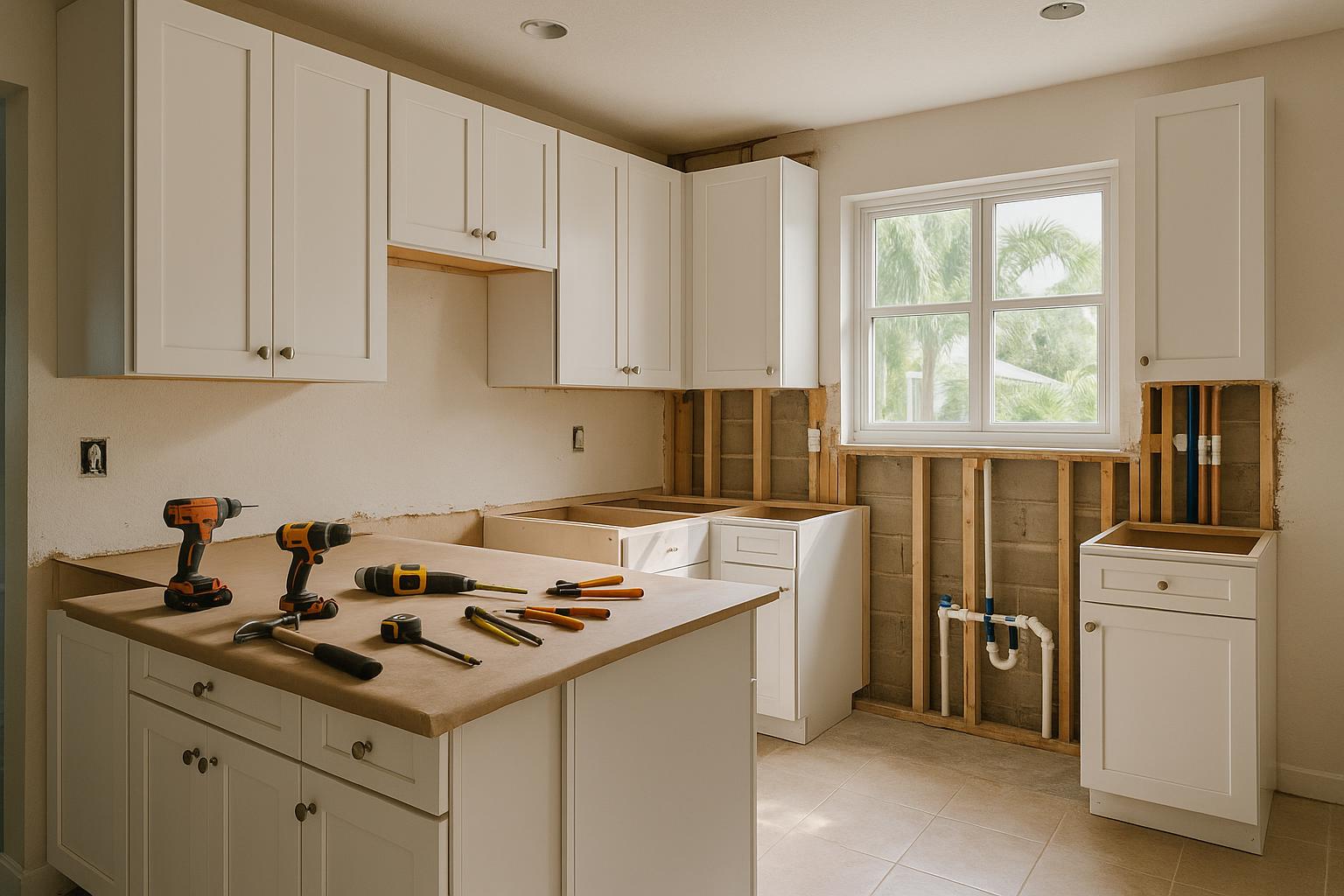
Once permits are approved, the physical work begins. Demolition is often the fastest phase, but it sets the stage for everything that follows. During this time, your contractor will:
- Remove old cabinets, countertops, fixtures, flooring, or tile
- Inspect the underlying structure for any hidden issues like water damage, mold, or outdated wiring
- Prepare the space for new installations
This is also the phase where surprises sometimes appear. In older Fort Lauderdale homes, it's not uncommon to find outdated plumbing, termite damage, or subfloor issues once walls and floors are opened up. A good contractor will communicate any findings immediately and discuss your options before moving forward.
Phase 4: Rough-In Work (1–2 Weeks)
Before the pretty stuff goes in, the behind-the-scenes work has to happen. This includes:
- Plumbing rough-in — Moving or adding water lines, drains, and supply connections
- Electrical rough-in — Updating wiring, adding outlets or switches, and installing recessed lighting boxes
- Framing adjustments — Modifying walls, adding blocking for heavy fixtures like wall-mounted vanities or TV mounts
Each of these trades may require separate inspections before the project can move to the next phase. Your contractor coordinates these inspections so you don't have to.
Phase 5: Installation (2–4 Weeks)
This is where the transformation becomes visible. Depending on the project, installation includes:
- Drywall hanging, taping, and finishing
- Custom tile work for backsplashes, shower surrounds, and floors
- Cabinet and countertop installation
- Flooring installation
- Interior painting
- Fixture and hardware installation — faucets, lighting, outlets, and switches
The installation phase is typically the longest, especially for kitchens and large bathrooms. Custom tile work alone can take several days depending on the design. Countertop fabrication and installation often requires a separate visit after cabinets are set, which adds time between steps.
Typical Project Timelines at a Glance
Here are general timeframes for common remodeling projects, from planning through completion:
- Bathroom remodel: 4–8 weeks
- Kitchen remodel: 6–12 weeks
- Flooring installation (whole home): 1–2 weeks
- Interior painting (whole home): 3–7 days
- Exterior remodeling: 4–10 weeks depending on scope
These ranges account for planning, permitting, and construction. Smaller projects with fewer moving parts naturally finish faster.
Phase 6: Final Details and Walkthrough (2–5 Days)
The last phase covers punch list items — small touch-ups, adjustments, and final inspections. Your contractor should walk through the completed project with you, address any concerns, and make sure every detail meets your expectations before considering the job done.
This is also when final inspections from the city happen, confirming that all permitted work was completed to code.
What Causes Delays (And How to Avoid Them)
Even well-planned projects can hit bumps. The most common causes of delays include:
- Material backorders — Specialty tiles, imported fixtures, and custom cabinetry can have long lead times. Order materials early in the planning phase.
- Scope changes mid-project — Changing your mind about layouts or finishes once work has started can add weeks. Make decisions during the design phase and stick with them when possible.
- Hidden damage — Water damage, mold, or structural issues discovered during demolition require attention before new work can proceed.
- Weather — For exterior remodeling projects in Fort Lauderdale, afternoon storms and hurricane season can impact scheduling.
- Permit delays — These are largely outside anyone's control, but an experienced local contractor knows how to navigate the process efficiently.
How to Keep Your Remodel on Track
You play a bigger role in your project's timeline than you might think. Here are a few things you can do to help:
- Make decisions early. Have your materials, colors, and fixtures selected before demolition begins.
- Be available. Your contractor will have questions throughout the process. Quick responses keep things moving.
- Trust the process. There will be days when it looks like nothing is happening. Inspections, drying times, and material deliveries are all part of the workflow.
- Communicate openly. If something concerns you, say so early. Small issues are easier to address before they become big ones.
Plan Your Remodel With Confidence
Understanding the timeline takes the mystery out of remodeling. Whether you're updating a single bathroom in Wilton Manors or tackling a full kitchen renovation in Pompano Beach, knowing what to expect at each stage helps you plan around the disruption and look forward to the results.
At Bold Exterior Remodeling, we keep our clients informed at every step. If you're considering a remodeling project in Fort Lauderdale or the surrounding area, we'd love to talk through your goals and give you a realistic timeline tailored to your home. Reach out to start the conversation.